Ride Boldly!

Bikes, bicycling, and road safety.

September 14, 2012
by julie
3 Comments

Infrastructure As “Human Rights?”

Yesterday, at the Pro Bike/Pro Walk Conference in Long Beach, the closing session was presented by a militant anti-car crusader, Mark Gorton. He was the founder/funder of the Streetsblog Network. Such speaker selection is pretty common — conferences of this type are typically filled with true believers, and there’s no point in taking a center path.

However, this very sense of extremism is the very thing that makes many cycle advocates completely out of tune with the communities they allegedly serve. One key statement in his talk, reported by multiple attendees and thus to be considered accurate until proven otherwise, shows the level of disconnect:

To be absolutely fair to Gorton, many of his points were spot-on, without any sense of extremism:

  • Cars are the most expensive form of transportation available in terms of both infrastructure, individual cost, and environmental cost.
  • Our transportation policy limits economic mobility.
  • What cars need is different from what people need.

However, to claim that transportation policy is a human rights violation cheapens actual human rights violations, and to claim such is the sign of entrenchment in first-world privilege. Limited options can restrict people’s access to their human rights, as described in the Universal Declaration of Human Rights, but it’s certainly no North Korean prison camp, either. Civil rights violations? Yes. It’s well-documented how frequently transportation policy flips the bird to civil rights, from bulldozing Rondo to USDOT finding that WisDOT ignored civil rights in 2012 Milwaukee.

As well, many of the principles of car-free living are very oriented to the urban environment. Unless we move to a post-apocalyptic, Hunger Games setup, where humans live in enclaves with broad, vacant expanses between, a fully blended policy is necessary. Many European countries held up as examples also fit within mid-size American states. You can certainly build walking-friendly county seats in rural America, and you can build rational road networks, but pure human-powered transport simply does not work to drive agricultural production.

The political divide in this country is pretty vast. Moving transportation planning to a more integrated model is long overdue. But this kind of talk is borderline offensive and is not going to do much to win over opposition. Strong economic arguments exist. ROI arguments exist. There are even some arguments that take advantage of the political divide that can be constructed (for instance, “building roads is another form of government subsidy for General Motors!”). But to claim full-blown human rights violation gets everyone precisely nowhere.

(There is another argument that the human rights claim also reflects the very white, very male nature of bicycle advocacy, which was also commented on at the Pro Bike/Pro Walk Conference — one attendee pointed out that “Not all poor people who can’t afford cars are Hispanic immigrants,” but that apparently they are the only low-income people PWPB know how to discuss. Women’s cycling was largely addressed in a 4-hour “addendum” to the conference. But that’s a different rant for another day.)
June 4, 2012
by julie
2 Comments

Stuff People Say When You Pull A Bike Trailer

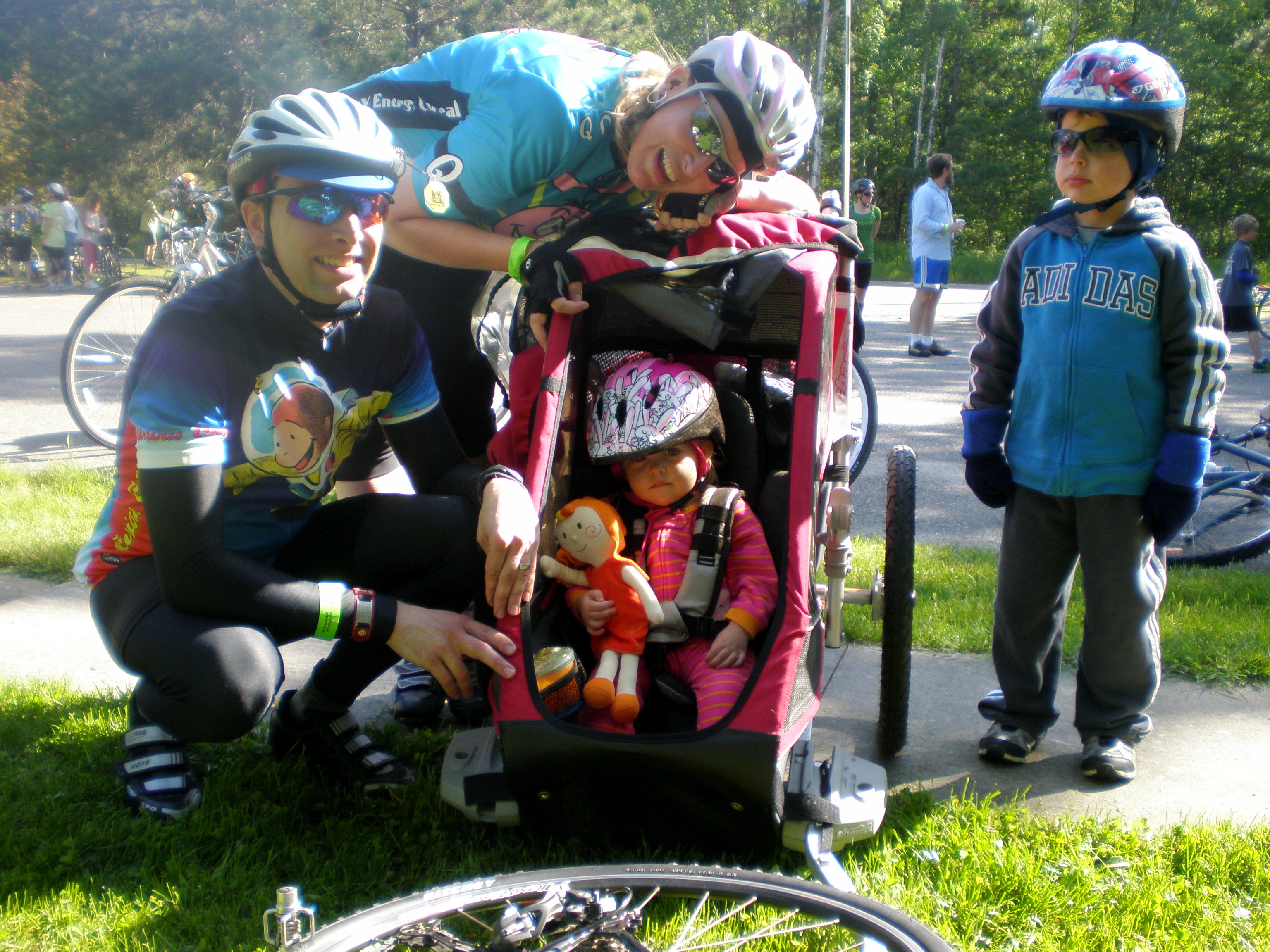
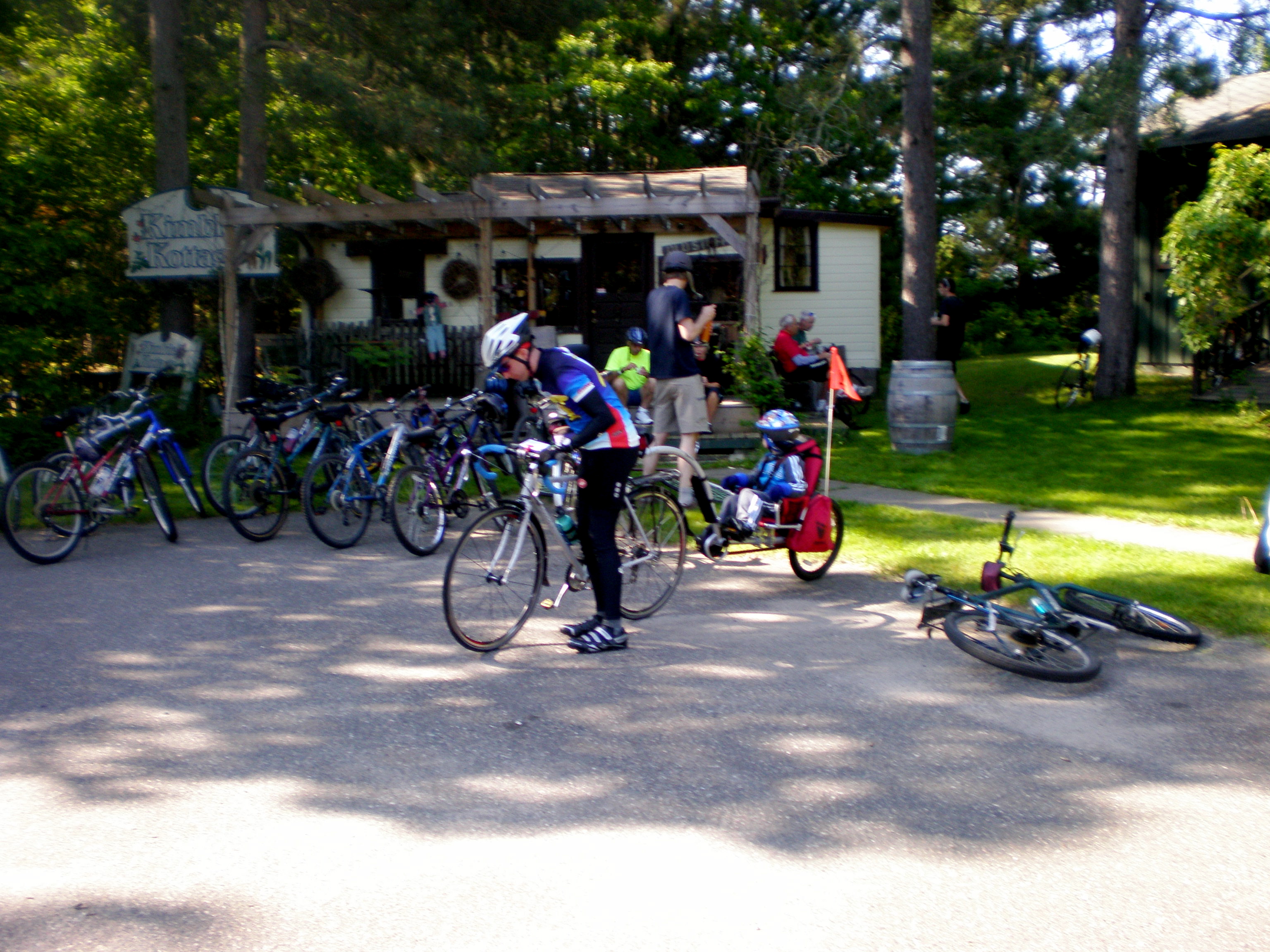
Biker familyThe last two weekends have been big bikey weekends for the family. Over Memorial Day weekend, we launched from our home base and explored the Coon Rapids Dam and Rush Creek Trail corridor leading to Elm Creek Park. This last weekend, we did the Tour of Lakes in Crosslake, Minnesota, and ‘Bunyaned’ a bit on the Paul Bunyan State Trail. These days, I ride a Surly Cr0ss-Check hooked up to a Chariot single trailer, and my husband rides a Surly Cross-Check with a Weehoo bicycle trailer.

The comments we get are entertaining.

About the trailer:

  • What a way to travel!
  • Wish that were me!
  • Way to go, towing the trailer!
  • You rock!
  • Your children will remember this forever.
There are also various entertaining comments when my daughter sings as I pedal. I have also been making up verses to “The Wheels on the Bike” to the tune of “The Wheels on the Bus.” Please note: I cannot sing.
weehoo bike trailerAbout the Weehoo:
  • Never seen one like that before.
  • Wow, he can pedal that?
  • Pedal little dude, pedal!
  • He sure has it easy.

One of the most common is the comment about not having seen one like this before. This is a recumbent single-speed tagalong, which allows for both malingering or pedaling. It allows the little dude to be a little dude, which is to say “easily distracted by things going on.” It’s also more stable and easier to turn than a typical trail-a-bike/tagalong.

Towing a trailer is work. Trailers are also pricey — good ones, anyway. But viewed another way, they’re cheaper than a babysitter if used enough, and we’ve now used the Chariot with both kids, and we expect the Weehoo to hand down as well. Spread out over years — and the Weehoo has a pretty broad size/weight range for the child — they end up being pretty good investments.

And, as the one lady said: Your kids will remember this. Here’s hoping they remember it fondly.


May 15, 2012
by julie
Comments Off on Training Wheels

Training Wheels

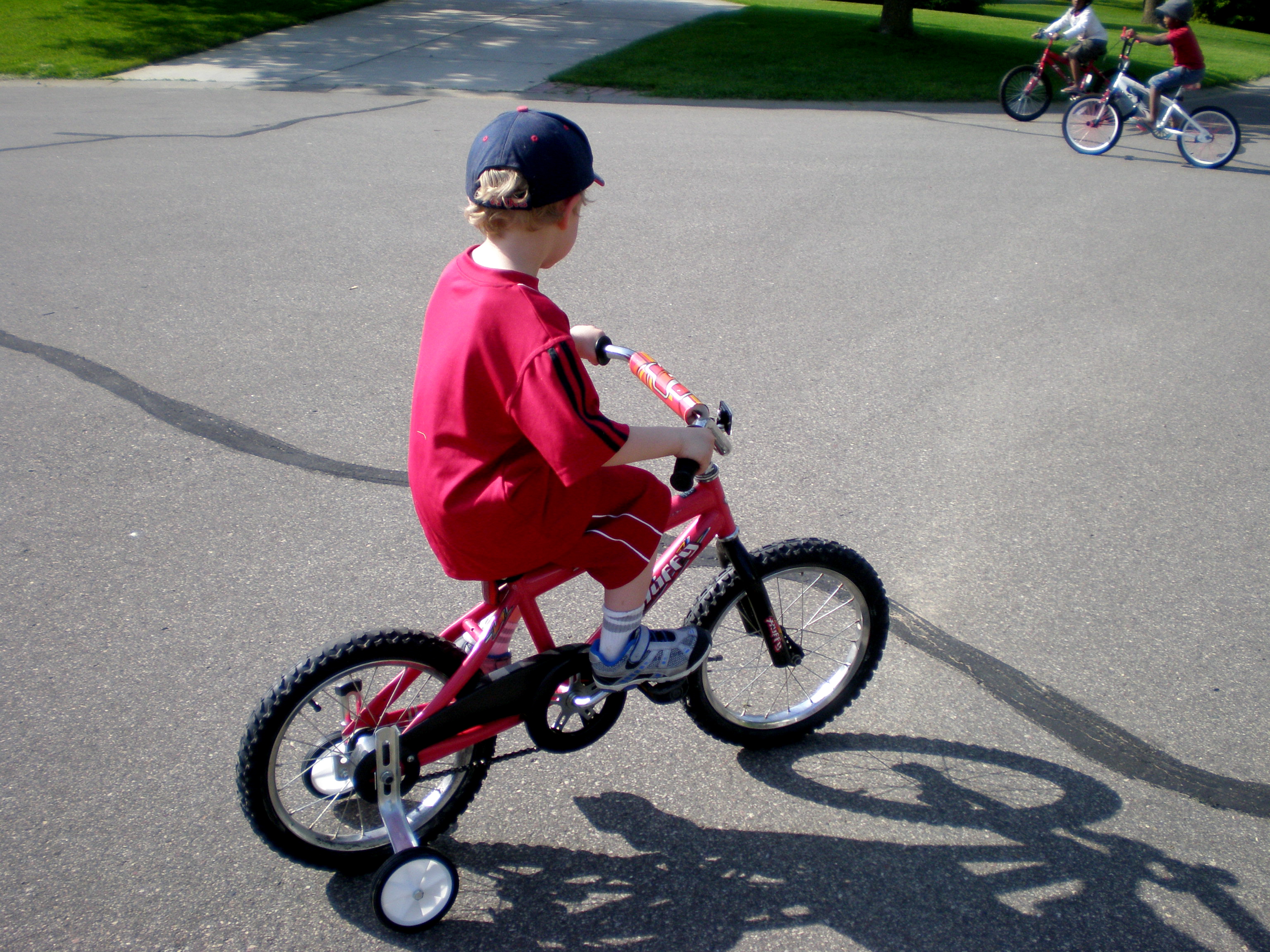
A lot of bike advocate types and purists oppose training wheels for kids. Per those individuals, they let kids go too fast, too soon. They discourage learning “proper” steering and “proper” braking. They advocate balance bikes, with the solid braking power of the feet, transitioning to a bike without training wheels and figuring out the gross-motor of pedaling once balance has been learned.

These people also oppose tricycles for similar reasons.

I’m some sort of outlier in that I don’t care that much. And there are several reasons for this.

  • My kid went to his first big bike event when he was less than a month old. He started attending track cycling events when he was a month old, and also got his diaper changed near a corner of a metro criterium at similar age. He went to every committee meeting for the 2009 National Rally of Bicyclists. You cannot put one over on him: Bikes have pedals.
  • He tried a balance bike and basically declared it lame.
  • All his little friends have bikes with training wheels.

There are things you argue with a 4-year-old. This is not worthwhile. For cryin’ out loud, the entire Traffic Skills 101 course from the League of American Bicyclists assumes most adults need to relearn everything they know. Kids can learn about braking better and steering better as they disengage from the training wheels. But that really matters is that your kid is excited about the bike.

And mine is. He got it Sunday. Coming home from preschool yesterday, he declared he wanted to go home and ride his bike. This morning, he chose his “bike jersey” to wear so he could ride his bike when we got home. He also demanded I find a bottle cage for his bike so he can put his water bottle on it.

And that’s what actually matters: That kids are excited about riding and relatively safe. And for all the “kids take more tumbles on training wheels!” talk… kids take tumbles. That’s what they do. They’ll be fine. Relax. Let them have fun and stop making them a proving ground for bike philosophy.


May 3, 2012
by julie
Comments Off on Minnesota Cycling: Deaths Down, Injuries Up

Minnesota Cycling: Deaths Down, Injuries Up

Commuter in rainThe Minnesota Department of Public Safety and the Minnesota Department of Transportation have released preliminary numbers on bicycle-related traffic accidents for 2011. I use the word numbers, because that’s what they are — pure counts.

In 2011, 4 bicyclists were killed in traffic collisions in Minnesota, which is a decrease from 2010’s 9 fatalities. However, cyclists in reported injury accidents increased to 942, over 882 in 2010.

MNDOT say that most accidents are caused by inattentiveness — specifically, motor vehicle operator distraction, and cyclist disregard of traffic signals or rules. I suspect this is based on accident report language and may not include any investigation.

These numbers aren’t all that disturbing, even the “increase.” Why? Well, while there were more injuries, numerically, the number of cyclists on the roads has been increasing steadily in the last several years, particularly in Minneapolis. So the actual percentage of injury accidents is also on decline in that sense. There is also a possibility that with greater numbers of cyclists on the roads and greater awareness of cycling, more injury accidents are being reported — which is to suggest the possibility of under-reporting in prior years. Many minor accidents aren’t witnessed or always reported, be they car-on-car, or car-on-bike. It’s a known thing. It’s also a thing whose trends are impossible to forecast well — how do you know how many invisible accidents there are, given that they’re invisible? It’s a data modeling problem.

In any event, accident counts are a good reminder to be careful out there. Ride predictably. Follow the law. Be visible. Hang up and drive.

May 2, 2012
by julie
Comments Off on St. Paul to Discuss New Bike Boulevard May 8

St. Paul to Discuss New Bike Boulevard May 8

Now that Jefferson Avenue has reached a conclusion and will be declared a bike boulevard after 4 years and countless shenanigans, the city of St. Paul is ready to discuss another bike boulevard.

On May 8th, the Hamline Midway Coalition will discuss a possible bicycle boulevard north of University Avenue from Park Street to Aldine Street. The meeting will be from 5 to 6:30 p.m. at the Hamline-Midway Library. Roadway changes to facilitate bike boulevard status, plus connections to the University of Minnesota Transitway, will be discussed. Feedback from the meeting will influence the city’s design plans.

Then, everyone will start wanking around and we’ll see something actually happen with this sometime around 2017. Bet on it.