Ride Boldly!

Bikes, bicycling, and road safety.

March 3, 2011
by julie
Comments Off on Subsidizing Driving

Subsidizing Driving

0saves

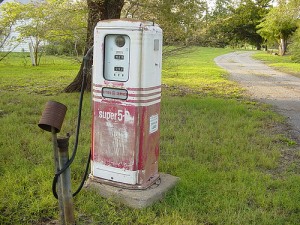
old gas pumpYesterday, the House of Representatives passed yet another extension to the Transportation Bill — number seven, to be exact. Most transportation spending comes via the dedicated Highway Trust Fund.

The trust fund is supplied via the 18.5-cent per gallon federal gas tax. Per statements by members of the House, expanding that tax is not an option in the current Congress — even though the trust fund has come nowhere near keeping up with demands of infrastructure building and upkeep. The shortfall has been coming from the general fund. In the current cost-cutting fervor of Congress, this source of additional funding is likely to be cut way back, if not eliminated entirely.

Enhancements, or the ability to spend transportation funds for things other than a road, may also come under fire, although the Chair of the House Transportation Committee says he expects an 80-20 mix of roads-to-mass-transit spending to continue. Spending to encourage bicycling is expected to be attacked, for a host of reasons — the belief that cycling is recreation, not transport; claims that drivers of vehicles are “subsidizing” cyclists when the trust fund is spent on multi-modal projects; claims that cycling spending “distracts” from constitutional mandate to build “post roads.”

Here’s the thing, though: We are subsidizing driving. In a really, really big way. There are plenty of studies and numbers that make it quite quantifiable and clear:

  • The Government Accountability Office finds that freight shipping by truck — the means by which 70% of goods are shipped in the US — has costs not passed on to the consumer that are six times greater than equivalent rail shipping costs, and nine times greater than equivalent waterway shipping costs. The costs of freight shipping include road congestion, pollution, and crashes — and the costs of gas subsidy and increased roadway maintenance.
  • Gas prices are fundamentally subsidized in the US. In an article from last year, when gas prices were only averaging $2.72 a gallon, studies suggested the “true cost” of a gallon of gas should be at least $4.37 — and even that doesn’t account for many costs associated with Americans’ thirst for oil. Cheap gas encourages dependence, and also increases associated costs (like roadway upkeep).
  • Planning codes in many cities and suburbs also subsidize driving via the mandatory construction of parking lots with new buildings or projects.

At the 2011 Minnesota Bicycle Summit, former Congressman James Oberstar observed that building out 12-foot wide bicycle facilities typically averages out to about $128,000 per mile, but building urban freeways can range from $46-100 million per mile. As subsidy goes, the lower cost of infrastructure — infrastructure that doesn’t also increase use of subsidized gasoline, or cause environmental damage — can be highly profitable with a lower utilization.

Charles Marohn at the Strong Towns Blog makes a case that emphasing autos at the expense of other forms of transportation is an inefficient use of space:

When streets are auto-only, the adjacent land pattern reacts by becoming less dense and less productive (a lower rate of return). When automobiles share neighborhood space with other forms of transportation, especially in places where those other forms actually dominate, the adjacent land pattern reacts by becoming more dense and more productive (a higher rate of return). We need more productive places.

It makes sense to raise the gas tax to reflect the real cost of that energy, but that’s not likely to happen right now. It also makes sense to continue investment in transit, cycling, and pedestrian-friendly design that liberates people from being forced to choose a car as transport mode, especially for the 60%+ of total daily trips that are under five miles. We’ll just have to see if sense wins out over political posturing on roads.
March 3, 2011
by julie
Comments Off on Bicycle Summit 2011: Be A Voice for Cycling Every Day

Bicycle Summit 2011: Be A Voice for Cycling Every Day

0saves

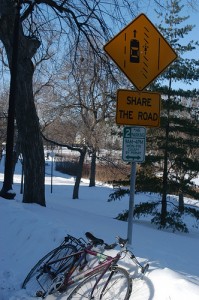
Share the Road - WinterOn February 28, 2011, 175 bicyclists and friends of active transport gathered in Saint Paul to discuss bicycle issues in Minnesota, and to get excited about the chance to speak up for bicycles at the state legislature. Maybe you were there. Maybe you weren’t — after all, 2.6 million Minnesotans rode bikes last year, so we have to figure that a large number of interested people were elsewhere that day.

Whether you were there or not does not matter. The most important realization about such an event is that it’s an event. A single day. And the cause of cycling requires people to be there for it every day — as Mayor RT Rybak of Minneapolis said as part of his presentation, cyclists need to push the agenda and hold politicians accountable. Whether you came to that event or not, you can be a voice for cycling.

Here are a few ideas for how you can be a voice for cycling — no matter who you are, what you do for a living, or what your personal schedule looks like:

  • Review this year’s Bicycle Alliance of Minnesota state legislative agenda. Contact your legislator to advocate for items on the bill, such as increased penalties for careless drivers.
    • Get your friends or family to do the same.
  • Join the Bicycle Alliance of Minnesota. They are fighting the fight every day.
  • Pay attention to the national cycling agenda via groups like the League of American Bicyclists or Bikes Belong. Be ready to contact your federal legislators in support of funding to facilitate active transport and modal choice.
  • Get involved locally. Does your community have a bicycle advocacy group or a task force? Does it have any kind of plan for walking and cycling? Check your city/town’s municipal web site, hit a search engine, check for it. And if you don’t find anything, contact your city councilperson or the town planning office and ask.
  • Get educated. The Bicycle Alliance of Minnesota coordinate a lot of super-duper awesome bicycling classes designed to create better bicycle drivers. Even if you’re pretty confident, you’ll learn something, guaranteed.
  • Set an example. Most cyclists and pedestrians also drive. Drive in a way that serves as a model to others. Hang up and drive. Watch for cyclists and pedestrians at intersections. Stop at crosswalks and let people through, as state pedestrian law demands. Respect all users of the roadways.
  • Get out and ride. The principle of safety in numbers suggests that the more people who ride, the safer we’ll all be.

Being there for bikes can be as simple as e-mailing your state legislator or your local town council, and getting your friends to do likewise. Being an advocate doesn’t require you quit your job and move into a box near the river with your bike, or a full-time gig with an advocacy group. Speaking up can happen any time of day or night, thanks to the power of e-mail and postal mail.

Events like the Bicycle Summit matter — they get people together to network and connect, information is shared, pep is rallied. But if a Summit is the only time legislators are hearing from the people speaking for Active Transport, progress will be slow or non-existent. By standing up for bikes at every opportunity you can, you propel the movement and make the world a better place.

March 2, 2011
by julie
Comments Off on Traffic Crashes & Cyclist Fatalities: 2009 Data

Traffic Crashes & Cyclist Fatalities: 2009 Data

0saves

The National Highway Traffic Safety Administraton has published its annual recap of cyclist fatalities for 2009. Some key stats:

  • 630 bicyclists were killed in motor vehicle crashes — about 2% of all motor vehicle traffic fatalities
  • 51,000 bicyclists were injured in motor vehicle traffic crashes — about 2% of all people injuried in traffic crashes during 2009
  • The majority of fatal crashes (70%) took place in urban areas
  • 67% of fatalities occurred outside of intersections
  • 72% of fatalities occurred during daylight hours
  • The average age of cyclists killed was 41 while the average age of injured cyclists was 31
  • Most crash victims were male
  • About one-fourth of all cyclists killed in 2009 were legally drunk; alcohol-involvement involving either the motorist or the bicyclist was reported in 40% of all fatal crashes

In Minnesota, there were 421 total traffic fatalities, with cyclist fatalities representing 2.4% of that total (10 deaths).

Read the full report: 2009 Traffic Safety Facts – Bicycle Fatalities (PDF)

There is a very good recap of this report available from Biking Bis.

March 2, 2011
by julie
Comments Off on Bicycle Facilities, Best Practices & Reluctant Cyclists

Bicycle Facilities, Best Practices & Reluctant Cyclists

0saves

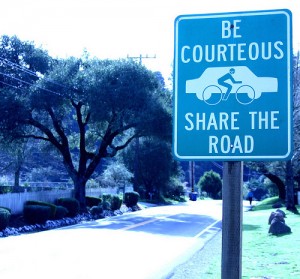
Share the Road SignI’ve previously written about the challenge of getting the 60% of would-be cyclists who are “Interested but Concerned” onto bicycles more frequently and as users of bicycles for transport. I’ve also written about the design issues associated with bicycle facilities and challenges of bike lanes.

Following the publication of a (flawed) study about cycletracks, many people are talking about the building of segregated bicycle facilities again. To recap the study, a limited study in Montreal found that cyclists using the city’s cycletracks experienced fewer accidents than those using nearby streets. The flaw in the study is that it fails to account for the “safety in numbers” effect, via which motorists are trained to look for cyclists by there being a greater number of them, or an expectation of where they will be.

The League of American Bicyclists often rewards communities who build special facilities, as it is nearly impossible to achieve a Bicycle Friendly Community status without such facilities. The facilities are rarely evaluated for their adherence to AASHTO design standards, however. This is actually somewhat in conflict with a published League position paper:

Special bicycle facilities have sometimes been viewed as the only way to provide improved access and mobility for bicycle traffic. These facilities have sometimes been developed in the absence of, or as a substitute for (1) programs for the development or improvement of the road network to accommodate bicycle traffic safely, and (2) efforts to educate the public about vehicular cycling.

In many instances, special bicycle facilities have been poorly designed, inadequately maintained or unnecessary. The problems posed by these facilities have been aggravated in many locations by laws which require the use of these facilities, however unsafe, when they are parallel to an existing road.

Since 1981, the bicycle facilities design standards of the American Association of Highway and Transportation Officials (AASHTO) have been reasonably good, although not by themselves sufficient to guarantee a good facility. Some bicycle facilities built after that date have not met those standards.

It’s pretty hard to dispute that bicycle facilities help encourage the “Interested But Concerned” 60% to bicycle more. Unfortunately, many facilities actively guide those less experienced cyclists into danger. These dangers emerge due to poor intersection design, placement near parking zones, and sidepaths that have them ride counter to dominant traffic flow.

Getting these 60% out via these facilities also has another effect: These riders believe the facilities are where they “belong” as cyclists, and so also take that attitude into their own time in a car. Other motorists — the 32% who will not ride, regardless — also typically believe this. Thus, the facilities feed on themselves.

Some would argue that this is okay, because it gets butts in bikes, and embrace a vision of putting facilities everywhere to deal with the issue that existing facilities don’t go everywhere. On the other hand, it perpetuates poor design and bad practices, and is an expensive alternative to better cyclist and motorist education — the latter of which would reach a higher proportion of road users. Many studies have shown that cyclists fare best when they act and are treated as drivers of vehicles. The perception of many that cyclists should be using lanes and segregated facilities isn’t rooted in science, but in fear. European city models don’t necessarily translate well into the United States for many reasons relating to how urban areas were built (and rebuilt) and underlying cultural issues (as most of Europe has never had the “car culture” of the more sprawling US).

Under most state laws, roads are bicycle facilities. We need to find ways to empower the 60% of reluctant cyclists to feel safe on these facilities, and we need to educate drivers not to be jerks. Additional segregated facilities need to be developed based on context — because, yeah, there are some routes on which they make lots of sense — and not based on a knee-jerk belief that they are “safer” or “better.” Segregating cyclists as a matter of policy doesn’t productively further a goal of having bicycling be considered a transport mode, and not a cute little way to get around for hipsters, hippies and people who just aren’t cool enough to have cars.

Photo by Richard Masoner, via Flickr/Creative Commons

March 2, 2011
by julie
Comments Off on Safe Kids Anoka County Plans 2011 Bike Helmet Events

Safe Kids Anoka County Plans 2011 Bike Helmet Events

0saves

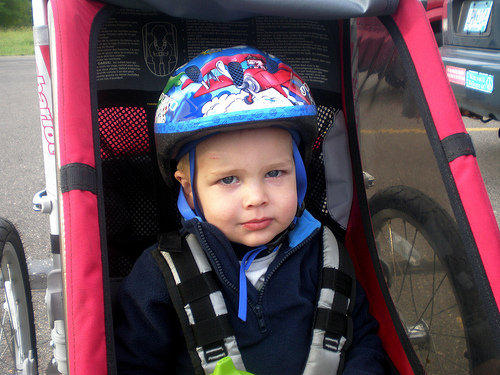
child in bike helmetFor people who live in or near Anoka County, Safe Kids Anoka County have announced the dates for their 2011 bicycle helmet sale and fitting events. Bike helmets will be available for both adults and children for a mere $12 each, cash or check only.

These clinics are a great place for new cyclists and cyclists who are getting back on the bike after a hiatus to get a quality helmet on the cheap, and to get expert help getting the straps and everything all proper so that the helmet actually protects your forehead and other notable parts. Kid and toddler helmets are also a great deal via these clinics, especially since kids tend to outgrow stuff or need refitting every spring even when they don’t outgrow the helmet.

Dates and locations for 2011 include:

  • Tuesday, April 12 — 4:00 – 8:00 PM, Blaine City Hall (10801 Town Square Drive, Blaine)
  • Tuesday, April 26 — 4:00 – 7:00 PM, Anoka County Sheriff’s Office (13301 Hanson Boulevard NW, Andover)
  • Tuesday, May 3 — 4:00 – 8:00 PM, Blaine City Hall (10801 Town Square Drive, Blaine)
  • Thursday, May 5 — 4:00 – 7:00 PM, Ramsey City Hall (7550 Sunwood Drive NW, Ramsey)
  • Wednesday, May 18 — 4:00 – 7:00 PM, Fridley Police Department (6431 University Avenue NE, Fridley)

Come on down and nab thyself a melon cover if you need one, or they make excellent gifts for all gift-giving occasions.