Ride Boldly!

Bikes, bicycling, and road safety.

January 24, 2011
by julie
Comments Off on Winter Cycling & Slow News Days

Winter Cycling & Slow News Days

0saves

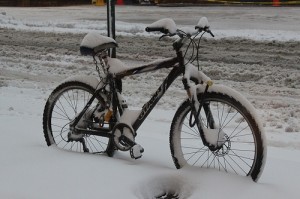
bicycle in winterThere has been the expected annual spate of winter cycling stories on multiple local news channels and sites – from the Strib and PiPress to features on local news and radio programs.

There is a common theme to these stories: Hey, look at the freaks! Sure, many of the stories have positive elements, such as the riders discussing their health and well-being. But the basic nature of the stories is one of abnormality, and not that this is a choice that can be made by people in the right circumstances – and in some cases, there are people who are forced to the choice by circumstances, although those people are rarely featured in such news puff pieces.

To my mind, a lot of these stories aren’t exactly bad for the profile of cycling in the state – or anywhere, as there are plenty of these stories in many cities – but they really don’t promote the idea of cycling as a sustainable or possible choice. It’s rare these articles contain actual tips on how to make such a decision for yourself. While many do present the winter cyclist as some sort of super-person, and thus there is the potential for aspiration, it’s really not made explicit that these people are admirable – just crazy.

I think a real sign of progress for the cycling community will be when we reach a point where these stories are driven out of the slow-news cycle by tales about fuzzy puppies, because there won’t be a freakshow/crazy element to the profiles – cyclists will simply be accepted and expected, regardless of season.

Photo by Jaymi Heimbush, via Flickr

January 21, 2011
by julie
Comments Off on Survey: Kids Better At Using Computers Than Riding Bikes

Survey: Kids Better At Using Computers Than Riding Bikes

0saves

Child on a tricycleAdvocates for programs like Complete Streets and Safe Routes to Schools will tell you that the programs encourage healthy activity for children and can be a key tactic to combat childhood obesity. Now, a new survey reported by TechWorld suggests that children five years old and younger are acquiring computer skills at higher rates than they are acquiring the ability to participate in healthy activities – like cycling.

The survey spoke to 2,200 mothers in 10 countries. Findings include:

  • 69% of children ages two to five can operate a computer mouse
  • 58% can play some form of computer game
  • 28% can make a mobile phone call
  • 52% ride bikes
  • 20% swim

Computer use is typically a sedentary activity. While such skills are essential for long-term success in school and society, basic childhood skills such as cycling and swimming should not be neglected, and have many benefits, ranging from fitness and weight control, sunlight exposure for vitamin D production, and even helping tire out the lil’ buggers so they’ll nap or go to bed on time.

Results such as those in this survey are likely to increase as parents who are largely sedentary raise children, and as schools continue to eliminate recess and physical education in favor of increased classroom instructional time. Continued awareness of the impact of building livable communities to combat obesity and inactivity should be included in all advocacy efforts towards these goals.

January 21, 2011
by julie
Comments Off on The Cost of Urban Parking

The Cost of Urban Parking

0saves

In a time of crumbling infrastructure and challenging budgets, the cost of street maintenance – let alone livability upgrades – is under constant scrutiny. One challenge is that the cost of doing something is easy to measure.

One recent study talks about one of the elephants in urban development: The actual social cost of parking in urban areas. The meters and parking lots have legitimate costs beyond simply the real estate and pavement.

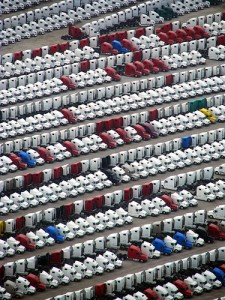
Truck ParkingAbundant parking encourages people to drive, rather than develop or use alternate transportation, leading to increased congestion in the urban core. Parking also takes the place of potential other development options, including green spaces. Pavement reduces land available to absorb rainfall and increases runoff, which can be dirtier due to increased car usage. And the list goes on. Scientific American estimates that there are three parking spots for every car and truck in the US.

“Minimum parking requirements” are often a part of municipal code applied to building and development permits. They rarely take into account other transportation options for accessing an area – and, frankly, many users of potential developments don’t take that into account either. However, these requirements often amount to a subsidy that encourages driving over any other options. Meanwhile, because these costs are shouldered by developers in the construction of parking ramps or large lots around buildings, everyone ends up paying for the parking even if it is ‘free’ – surcharges are built into the rent for building users, which are passed along in retail prices for retail developments. Municipalities shoulder the costs associated with parking-lot storm-water runoff (which in turn end up in taxes/water bills).

As we talk about community livability and complete streets policies, as well as developing additional infrastructure for alternative transportation options, it would be a good time for communities to examine the actual costs of ‘amenities’ like metered on-street parking, and minimum parking requirements for new and repurposed development opportunities. Creating more rational standards for parking, and raising the cost associated with using some forms of parking, could encourage development in many areas, as well as increase revenues associated with some municipal parking. It would also help people consider the true cost of driving versus using other transportation alternatives, as the parking subsidy is invisible to most road users.

Photo by rogersmith, via Flickr

January 20, 2011
by julie
Comments Off on Ski-U-Mah: U of M Plans Bike Center

Ski-U-Mah: U of M Plans Bike Center

0saves

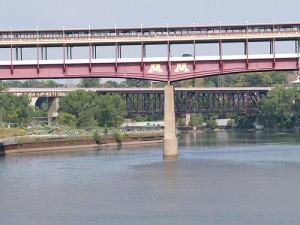
University of Minnesota Pedestrian BridgeThe University of Minnesota is embracing the concept of reuse-recycle to encourage students to use bicycles to access campus by repurposing an old bus center in the Oak Street Ramp to become a bicycle center.

This project, like many others in the Twin Cities, is being supported via a grant from the Non-Motorized Transportation Pilot Program.

The new center will feature secure bike parking, showers, and other amenities, much as is offered by the popular Midtown Bike Center on the Greenway, which has proven popular with Minneapolis bicycle commuters.

Use of the facility to park will incur fees – but the annual fee will be much less than even the monthly cost to park in similar university facilities. Bicycles already account for more than 10% of campus trips, and such facilities will help encourage students, faculty and staff to increase this number and reduce traffic congestion in what is a very busy area.

Image by Steven Vance, via Flickr

January 20, 2011
by julie
Comments Off on Gran Fondo Announced for Minnesota!

Gran Fondo Announced for Minnesota!

0saves

Minnesota Ironman Bicycle RideThe Minnesota Ironman Bicycle Ride – a 45-year spring tradition in Minnesota – is starting a new tradition this year by adding a Gran Fondo (the Minnesota Gran Fondo) to their already solid event.

The Ironman is a typical one-day event ride with the mild twist of offering a metric century and a century route early in the season. Given that some years it has been snowing during the event, and the weather is always unpredictable, some of the ‘iron’ of the event is hauling out of bed and putting butt to seat. (True fact: The nicest weather for this event in recent memory occurred in 2007, a year I was unable to attend.)
Minnesota Gran Fondo
A gran fondo is a timed event, but not a race. It’s a mass start event for all ages and abilities, and allows individuals to measure their own time more formally. Ironman will be offering this option on the 68- and 100-mile routes. Participation will require showing up and checking in at Lakeville at a proper time – although, really, to hit the rest stops on the 100-miler, this was always an unstated requirement of Ironman participation. Riders not participating in the gran fondo will likely want to start earlier or later to avoid the mass start!

Adding a gran fondo to this event is a great enhancement that fits well with the routes, and also with the sense of achievement shared by those who complete the longer routes. The mass start will also be an exceptional opportunity for cyclists to create community and meet other riders of similar ability and ambition. While I don’t always see it happen, I find large community events such as the Ironman are a great way to network with other cyclists and meet people outside your normal circles.