
Ride Boldly!

Bikes, bicycling, and road safety.

March 29, 2011
by julie
Comments Off on Minnesota Bridges: Above Average (But Still In Disrepair)

Minnesota Bridges: Above Average (But Still In Disrepair)

0saves

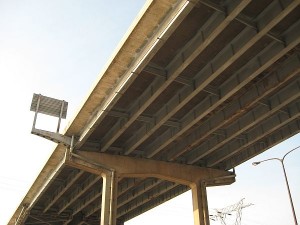
Lafayette Bridge (US52, St. Paul)Wondering about the current state of Minnesota’s bridges? Transportation for America has you covered. They’ve been releasing state-by-state reports on the state of bridge infrastructure in each state. Minnesota was one of their early releases, as Minnesota also offers one of the horror stories about the worst-case scenario for a bad bridge with the I35W bridge.

The report is a mix of standardized information included in every report, along with some specific information about bridge conditions in the state. The Minnesota report reveals many facts, including:

  • Out of 50 states and the District of Columbia, Minnesota ranks 34th worst nationally for the state of its bridges.
  • Of Minnesota’s 13,068 highway bridges, 1,149 of those bridges are structurally deficient (1 in 11)
  • The average age of Minnesota bridges is 35.2 years; bridges are typically built with 50-year life expectancies. Almost 2,900 existing Minnesota bridges are already older than 50 years.

Many structurally deficient bridges are in rural areas and carry lower volumes of cars. Seven of the top 10 most trafficked deficient bridges are in Ramsey County, with 2 additional of these high volume bridges in Hennepin County. The last bridge in the top 10 for volume is in St. Louis County (Duluth). Note that three of the Ramsey County bridges are the MN52 River Crossing, which apparently is statistically considered three spans. (I can kind of see why.)

The report provides solid information about the proportion of funding used for maintenance versus expanding the highway system, and features a really nice color-coded map of Minnesota’s counties and their bridge situations. The information is extremely valuable in light of current discussions about the gas tax, the new Transportation Bill, and budget issues. Minnesota continues to deal with bridge issues, ranging from bridges on I-34 and I-94 to city and county bridges like the Plymouth Avenue Bridge in Minneapolis, currently closed to vehicles pending finding the money to repair corroded cables. The Lift Bridge in Stillwater continues to get a lot of press, as Representative Michele Bachmann (R-MN6), Senator Amy Klobuchar (DFL), and Governor Mark Dayton (DFL) all work in various ways to get a new St. Croix river crossing approved. This report shows that these bridges in the news are just the ones getting coverage, and are by no means the extent of Minnesota’s infrastructure problem.

March 28, 2011
by julie
1 Comment

St. Paul Flooding Puts Landing Underwater

0saves

Due to high river levels, the city of St. Paul has closed Shepard Road from Chestnut Street east to Highway 61. This closure impacts the river connections in that area for bicycles. Based on basic observation, some of the Samuel Morgan segment west of Chestnut along Shepard Road is underwater — standing on the Science Museum overlook, you can see the trail, along with the railings and lightposts, slowly go underwater.

Presumably some of the trails to to east along Shepard/Warner Road are also afloat, along with parts of the Point Douglas Route near the river. Not sure about the status of Harriet Island and Lilydale Road, which do feature some areas very close to the water’s edge as well. Hidden Falls Park and Crosby Farm flood every year — not just years with high water downtown.

When these areas flooded last year, the areas were cleaned up nicely within a reasonable period of time. Current forecast does call for higher waters this year, which means it may be some time until these areas are usable for cyclists in 2011.

March 24, 2011
by julie
2 Comments

Minnesota Budget Shenanigans: Transit Funding

0saves

I think a lot of people have believed that with a GOP-controlled legislature and a DFL governor, not a lot is going to get done this legislative session in Minnesota. Posturing over the budget, however, is happening. How much of it gets signed into law is another thing, of course.

In the latest round, the Minnesota House Transportation Finance committee voted to divert the 0.25% sales tax that Twin Cities residents in Hennepin, Ramsey, Dakota, Washington and Anoka Counties pay to fund light rail into the state’s general fund. This is major funding for light rail — more than $60 million dollars — but virtually chicken-feed when it comes to plugging the holes in the state budget. The funding would make up for $51 million proposed cuts in bus funding, but harm the construction of the new Central Corridor light rail line between the Saint Paul and Minneapolis downtown districts, and delay planning for the Southwest Corridor line.

It would also be awkward in that local sales taxes are intended for local use, and the legislature should not be appropriating them to the general fund. This is a kind of boundary-stomping that is typically thought inappropriate by both parties.

Transit is critical infrastructure to promote social mobility, and provides solid support for active transportation such as bicycling and walking. This is among the reasons Bike Walk Twin Cities is funding improvements in places like Fridley — to help local residents connect more effectively via active means to transit.

The UpTake has provided video from the hearing:

I have my doubts that this will be allowed through in a budget bill, but it’s something to keep an eye on.

March 23, 2011
by julie
4 Comments

FHWA Approves Contraflow Bike Lanes; Physics Remains Horrified

0saves

Via TheCityFix comes news that the Federal Highway Administration has officially blessed the concept of contraflow bike lanes as part of the Manual on Uniform Traffic Control Devices (MUTCD).

Summed up, a contraflow bike lane is a bike lane that puts cyclists riding on street against the flow of traffic.

Arguments in favor of such lanes typically relate to allowing cyclists to use one-way streets in both directions, which makes it more convenient for cyclists. Some also argue that it helps calm traffic, although I don’t know that there’s good data on that.

While TheCityFix seems to lump opponents in with people who also oppose mode shift, saying “(t)hose against the idea argue on the basis of traffic laws, safety, directing resources away from automobiles and even based on the cost of new signage,” the pro-auto folks are their own group. Many bicycle advocates argue against contraflow bike lanes without being pro-automobile. Going against traffic flow creates confusion, and the laws of physics are pretty immutable in that a head-on collision between two moving objects — even one at a lower speed — is more damaging than a rear end collision or a collision where the moving bodies are moving in a direction other than straight at each other.

It’s obvious that opening up streets with contraflow lanes will reduce travel time for the group receiving the road rights. I’m still not sold on the safety of it, particularly in situations in which cars attempt to pass one another, or bicyclists attempt to pass each other. Momentum cares not for MUTCD guidelines. Advocate John S. Allen did a very nice piece on contraflow lanes that I think sums it up well in that sometimes a contraflow overlay can serve a good purpose, but at other times it’s a hazardous addition to the road. Much like many other guidelines in the MUTCD, I expect to see contraflow lanes implemented in ways that are both good and bad.

March 21, 2011
by julie
Comments Off on Nine Mile Creek Trail: Progress & Stasis

Nine Mile Creek Trail: Progress & Stasis

0saves

The proposed Nine Mile Creek Trail extension through Edina has stirred up a lot of controversy, including NIMBYism disguised as faux environmental concern. This is normal in Edina, which has an excellent Bicycle Task Force working hard despite many residents who just don’t get it.

The proposed trail would link Edina to the main regional network of trails, including several commuter trails and a variety of recreational trails. Three Rivers Park District has come out in favor of the proposed extension, opting for the trail route along the creek rather than rerouting to nearby surface streets. This essentially provides the go-ahead for the extension, save one kinda mission-critical issue: Funding.

The seven-mile trail is expected to cost $20 million. Three Rivers hopes to receive $11 million in federal grants to fund construction, from federal awards expected to be announced in spring 2012. Additional funding will be sought from the Nine Mile Creek Watershed District and the Hennepin County Bicycle Capital Improvement Program. Once funding is secured, construction would begin in 2015.

Worth noting in this project is the overall cost — about $2.85 million per mile of trail. To be fair, this includes $5 million for trail bridges over the Crosstown (MN 62) and MN 100, and may include funding for stabilization of the creek banks in order to avoid yearly path washouts (although that’s quite unclear in the documents and coverage I’ve read). Even dropping the cost of the two bridges and leaving their mileage in the total, you’re still looking at more than $2 million/mile of trail — and it’s perhaps unfair to drop the bridge costs for the trail, as without passage over these two highways, the system will fail to achieve stated linkage goals.

Still, given that former Congressman James Oberstar cites averages of $128,000/mile to build 12-foot bicycle paths, it’s clear that his number must be some sort of average. Either some accounting must take place to remove items like the environmental work on the creek banks, or some paths must cost next to nothing to balance out this kind of average.

And, of course, it’s worth noting for the noble Edina residents who have opposed this project: That $11 million from the feds is by no means a sure thing with the current Congress and the next election not coming until fall 2012. They may have many years without having to worry about a trail being built on public right-of-way near their homes.