
Ride Boldly!

Bikes, bicycling, and road safety.

February 12, 2011
by julie
1 Comment

Slowing Down: Embracing Lower Speed Limits For More Complete Streets

0saves

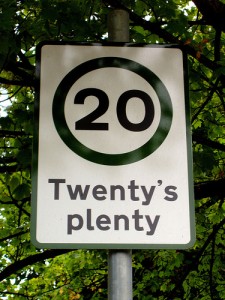
20 mph speed limitThis is pretty cool. Strasbourg, France, is planning to reduce speed limits throughout the city to 30km/hour, or about 18mph, as an initiative to protect cyclists and pedestrians.

Speed limits in much of the city are already 30km, but drivers often accelerate when reaching new speed zones, causing accidents. The mayor describes the proposal thusly:

The public roads no longer belong to automobiles alone. They must be reimagined to be redistributed in a fairer manner between all forms of transportation. The protection of the most vulnerable is thus reinforced in zones in which all users have access but in which the pedestrian is king.

The move will be voted upon by city residents, who have the final decision on the initiative. Strasbourg is already considered bicycle-friendly: Fewer than half of all residents use a car to get around, and there are over 300 miles of striped bikeway.

This attempt to slow down motorized traffic in favor of balanced safety is also reflected in the work of organizations like 20’s Plenty For Us in the UK. The founder of that group says:

A city that permits 30 mph on residential roads will never be child friendly and will always deter physical activity. Speed becomes greed when it stops us and our children from walking or cycling on our roads through fear of traffic.

This attitude is being adopted in various ways by many American advocates for active transportation via initiatives like street diets (reducing lanes to add cycle facilities), medians, and other facilities to protect pedestrians and cyclists. A common pushback for these initiatives tends to be concerns about increasing travel times and inconvenience for motorists – this has been a theme in some of the Jefferson Avenue kerfuffle. Some of the information provided in the 20’s Plenty FAQ is great fodder for advocates trying to create more opportunities for neighborhood cycling, Safe Routes programs, and more. As it is, most US communities default to 30mph unless in a school zone — right near the school facility — or a park, neglecting to factor in how children and others get from their homes to those highly limited areas!

Protecting the needs of vulnerable streets users and encouraging freedom of modal choice are two goals that should be a part of urban planning initiatives. Complete Streets is one approach to the issue, but may not address the entire psychology of calming traffic and getting people to slow down for the good of the community.
February 11, 2011
by julie
Comments Off on Myths & Facts: Transport Funding

Myths & Facts: Transport Funding

0saves

With new legislatures and a new Congress in session, it’s a fine season to review some of the myths and truths of transportation funding and bicycle advocacy.

Myth: Roads are paid for via user fees, so bicyclists are getting free rides on the streets paid for by motorists.

Fact: Not so much. Gas tax is paid on all sorts of vehicles NOT used on roads (ATVs, boats, lawnmowers). And roads actually aren’t paid for entirely from tolls, gas taxes, vehicle licensing, etc., anyway. A report released in January by the U.S. Public Interest Research Group (U.S. PIRG) demonstrates that gas taxes cover barely half the costs of building and maintaining roads. As well, gas taxes are often paid on fuel used to travel local roads, whereas the tax money is used to pay for state and federal projects.

Myth: Cyclists are determined to force everyone out of cars.

Fact: Okay, sure. There are some militant all-bike, all-the-time folks who only exist via bicycles. Most of them, however, will grant a place and a purpose for autos. Accusations that cyclists and policies facilitating cycling are an attempt to force motorists out of their cars – such as the statement made by Brooklyn (NYC) Borough President Marty Markowitz in his 2010 State of the Borough address that “They are trying to stigmatize car owners and get them to abandon their cars” is really not the case.

Many cyclists own cars. The purpose of creating Complete Streets and policies that encourage transportation alternatives such as transit, walking, and cycling options, are just that: To create options. In many places, current urban architecture is such as to limit options.

Myth: Cyclists don’t pay their share in taxes.

Fact: Per Bicycling Retailer figures, over 46% of cyclists belong to households with an income of over $75,000/year. Median household income in the US is significantly lower, at $50,233/year.

Myth: Bikes are for kids!

Fact: Bicycle mode-share for commuting is 8% in the Twin Cities. These aren’t just kids. These are degreed professionals. Nationally, walking and bicycling make up 10% of all trips, but only receive a tiny fraction of the money that goes to transportation projects.

Myth: Building transit, bikeways, and pedestrian access aids doesn’t create jobs.

Fact: While I have questioned using a single study that claims that such projects actually create MORE jobs than road construction as a universal truth, come ON. Do you think asphalt pours itself? Clearly, such projects do promote employment.

Got any other myths that tick you off? Comment below!

February 11, 2011
by julie
Comments Off on Study: Cycle Tracks Safer Than Riding in Street

Study: Cycle Tracks Safer Than Riding in Street

0saves

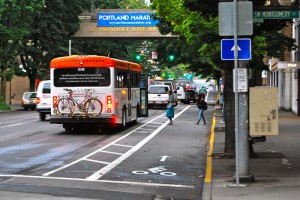
Portland Cycle TrackA new study published in the journal Injury Prevention reports that cyclists in Montreal using dedicated cycle tracks have lower incidence of injury than cyclists using the street.

Cycle tracks are fairly common in Montreal and throughout Europe, particularly in the Netherlands. These are generally segregated from the traffic in the street, but still essentially part of the street. Perhaps more importantly, cycle tracks are typically dedicated for use by bicyclists – unlike mixed-use trails that feature a changing cast of runners, skaters, dogs, kids and other users.

The study concluded that “These data suggest that the injury risk of bicycling on cycle tracks is less than bicycling in streets. The construction of cycle tracks should not be discouraged.” However, there are challenges to this conclusion: In a city with significant cycle track mileage, are motorists unused to watching for cyclists in the street? Given recent safety in numbers studies, this is a factor not to be discounted, and the study’s user counts showed higher incidence of use of cycle tracks versus reference streets.

It is, however, true that saying that cycle tracks are less safe may be a red herring.

One area of challenge for cycle tracks in many road projects in the US is right-of-way and the space to implement. Some streets require ‘road diets’ to achieve even a non-segregated bike lane, let alone a cycle track. In many communities, getting buy-in to reduce motorist traffic by a full lane to accommodate cyclists is a hard sell, as you might imagine.

Another challenge, and one which I have covered at length previously, is the perception that comes with bike lanes and sidepaths that cyclists should only be using such facilities, and are not legal users of other streets (or, in municipalities without mandatory sidepath rules, that cyclists may choose to use the road rather than the sidepath!).

Still, this study supports the idea that building cycle tracks may have merit as an encouragement to cyclists and as an urban amenity.

Photo by itdp, via Flickr.

February 10, 2011
by julie
1 Comment

New House Transportation Committee Member: Biking Shouldn’t Be a Part of Committee Work

0saves

I love DC Streetsblog, because they’re in the capitol and thus have all kinds of opportunity to access members of Congress, congressional hearings, you name it — and they provide awesome, targeted coverage.

Today, they published an interview with US Representative Duncan Hunter (R-CA), a new member of the House Transportation and Infrastructure Committee, to learn about his priorities as a member of the committee. The big takeaway from their discussion: Hunter says roads are constitutionally mandated, but transit and bikes aren’t. Transit should be built if it can be self-supporting and pay for itself. If communities want to do bike stuff, that’s fine, but it shouldn’t come out of the work of the House Transportation Committee or somehow be mandated from the federal level.

Hunter outright says: “I don’t see riding a bike the same as driving a car or flying an airplane…. I think it’s more of a recreational thing.

The argument that roads are constitutionally mandated comes from the US Constitution, Article I, Section 8, which enumerates Congressional powers. The specific statement is that Congress has the power “To establish Post Offices and post Roads.”

Of course, back in the day, only major towns had a post house, and the roads used by post riders or mail coaches were the ‘major’ routes. The spread of postal service has blurred the traditional distinction. To go all constructionist on the issue, most roads wouldn’t qualify under this clause as mandated for federal support.

Of course, if bicycles are allowed on these constitutionally-mandated roads and they’re designed for multi-modal use, wahoo. Somehow, I’m not sure that’s how Congressman Hunter approaches the issue, and I’m pretty positive he’s not the only congresscritter with such views. Hijinks are going to ensue, undoubtedly. Welcome to the new Congress.

February 10, 2011
by julie
1 Comment

Precedent? Washington State Seeks To Tax Electric Vehicles

0saves

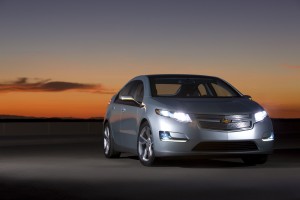
Electric Car - Chevrolet VoltThis morning, Marketplace on NPR reported that the state of Washington is looking to tax the owners of new electric vehicles for the gas they do not use.

Since gas taxes help pay for road maintenance and repair — and states are already seeing revenue shortfall and crumbling infrastructure — Washington is about dwindling road funds as more drivers go electric. Thus, the proposal of a $100/year “user fee” for drivers of electric vehicles. The Seattle Times estimates that a car with reasonable gas mileage that travels 12,000 miles.year pays $204 in gas taxes.

Much like how we fund, well, pretty much every common good — schools, health care, food inspection — electric cars start to raise the question of how road repair and construction is built. Depending on the state/county, such funds come from licensing taxes, vehicle purchase taxes, the general fund, real estate taxes, and gas taxes.

Taxing electric vehicle users for the gas they don’t use is a stop-gap, and brings to mind the common chestnut that cyclists don’t pay for the roads they use, either. I’ve addressed this before, and abundant stats on the household incomes of bicyclists exist — in 2009, 46.4% of cyclists lived in homes with a household income of at least $75,000, which is well above national averages. You can bet these homes are making economic contributions.

But then again, electric cars are more expensive (in general) than gas-powered cars right now, and also demand a lot more planning for charging, both at home and away. Electric cars are not likely to be purchased by people looking to save money or in lower income brackets, at least in the immediate future. Yet, the focus is on their failure to contribute via gas taxes. It really isn’t a stretch to wonder if more harebrained schemes to have cyclists “pay their way!” might be next.