
Ride Boldly!

Bikes, bicycling, and road safety.

January 27, 2012
by julie
2 Comments

A New Transportation Bill? Panic, Round 8,377,201

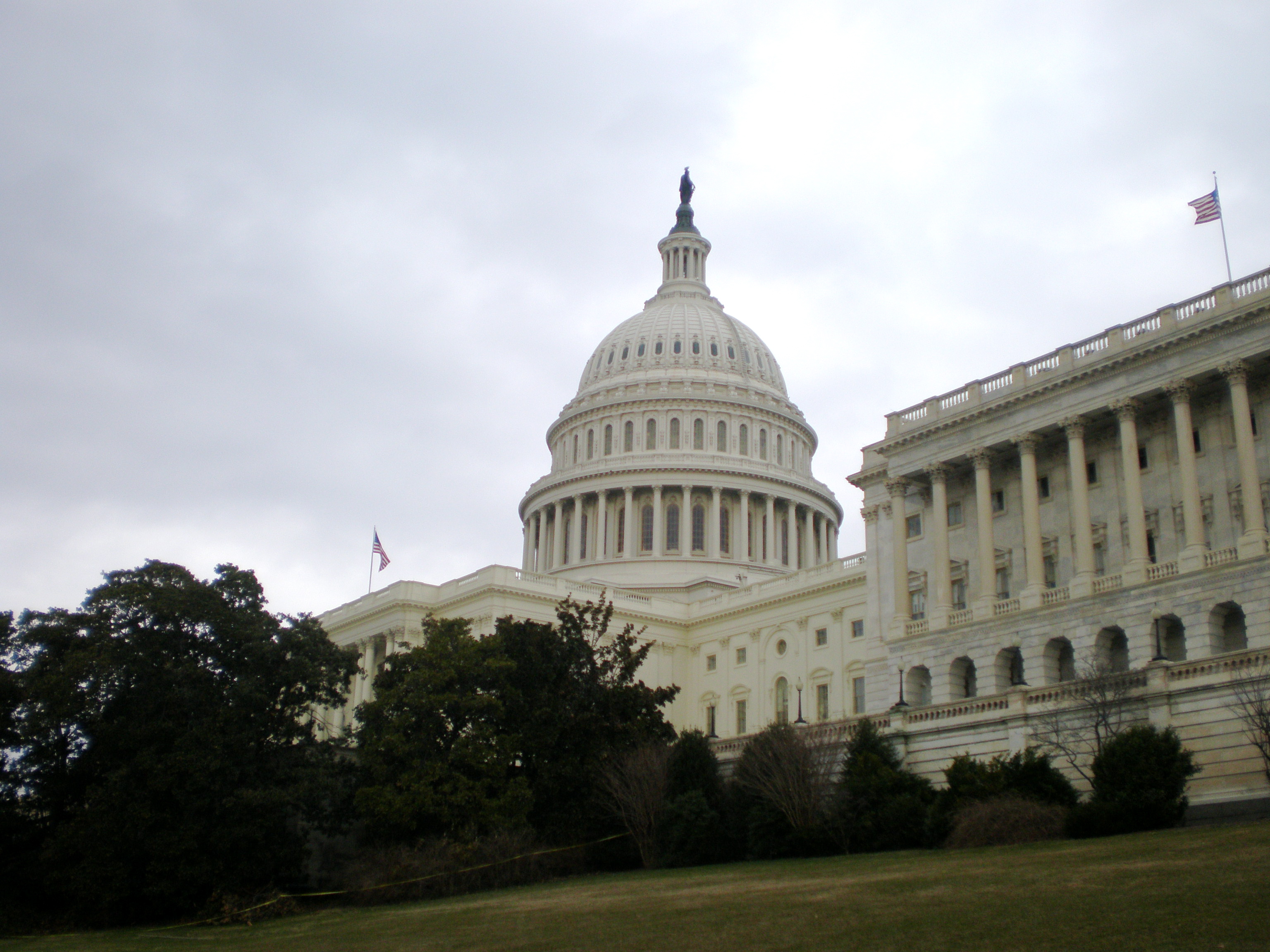
US CapitolNext Thursday, February 2, the House Transportation Committee is expected to vote on the “American Energy and Infrastructure Jobs Act.” Note the propaganda-friendly naming. This is, in fact, intended to be the long-awaited multi-year transportation bill.

As usual, we are being asked to PANIC about it and contact appropriate representatives. The League is asking us to contact everyone (even though this is still in Committee), because the current version eliminates the two largest programs that fund biking and walking infrastructure — Transportation Enhancements and Safe Routes to School.

Most representatives will not be a part of this voting process. Work is also underway to restore these programs to the bill, probably via a Committee member such as Earl Blumenauer (D-OR).

I agree that keeping Transportation Enhancements and Safe Routes to Schools active in any new transportation bill is important. I agree that people should contact appropriate House members to urge amending the bill or not passing it from Committee. I am growing a little tired of the constant state of panic about “they are going to kill cycling!”

Transportation Enhancements has been under near-constant assault for the last year. Transportation Enhancements federally funded, community-based projects that enhance surface transportation by improving the cultural, historic, aesthetic and environmental aspects of the infrastructure. They can address bike/ped infrastructure and safety, landscaping, rail-trail work, environmental mitigation, archaeological planning/research, historic preservation, and tourist facilities. The Heritage Foundation, a big conservative think-tank, has labeled them “a waste of taxpayer dollars.”

Because, look. They can’t kill cycling. They can remove funding, make things harder when working with federal funds, etc. But they lack the ability to dictate the use of local funds for cycling. They lack the ability to quash the grassroots. Sure, some existing infrastructure could be eliminated, but that’s true right now. A key to keeping cycling alive is much more about expanding the “movement” beyond the already-involved, the lifestylers, and advocates and convincing members of the community that bicycling is worthwhile, that bicyclists aren’t trying to force everyone’s ass onto a banana seat, and that by providing access to many modes of transport within a community we enrich users of ALL modes.

When you make that expansion, situations like this are less about paaaaaaaaaaaaaaaaaaaaaanic and more about harnessing the general social sentiment. Right now, the general sentiment isn’t there to harness outside of specific communities. And that’s where we need to focus more energy — rather than on repeating the advocacy panic response repeatedly.

That said, check the list of members. See if your member is on the Transpo Committee. Note that if your person is not a Republican, you’ll have to manually find their House web site to call or e-mail them, the preferred methods of contacting an office in this modern, post-terrorist age. In Minnesota, these are Tim Walz of MN-1, and Chip Cravaak of MN-8. The League of American Bicyclists also has an excellent run-down of the act, some facts around the at-risk programs, and nice contact forms for members of Congress.

January 7, 2012
by julie
3 Comments

A Bike Route on Snelling Avenue?

Shouts out to @reubencollins on ze Twitter for tweeting this article about people looking to have the resurfacing project on Snelling Avenue in St. Paul include bike lanes.

This is a reasonably good article, with some gaps. The main gap is really surrounding the concept of Complete Streets, and I’m not strictly certain that’s on the author so much as the people he spoke to for the piece.

Would adding bike lane striping be cheapest during a resurfacing project? Certainly. Do cyclists lack reasonable North-South choices to get through the Saintly City? Ohmyyes. Is slapping some paint lines going to make most of Snelling Avenue a Complete Street? OhmyNO.

The article does mention a few reasons why — first, Snelling is a truck route. There is a limited ability to narrow the lanes and maintain the status of the road as a truck route. And, much as cyclists lack north-south options through the city, so do trucks. Snelling Avenue is a key arterial route for trucks, and connects to many local businesses that need trucks to be able to reach them. Most of the north-south streets aren’t truck routes, and have significant direct residential frontage — people who would oppose their north-south streets becoming truck routes, and people who have less need for trucks to be able to get into their neighborhood than many of the businesses with Snelling Avenue frontage.

There are also a large number of uncontrolled intersections. The merges off the Pierce Butler Route and Como Avenue come to mind, where cars have about 3 feet to merge and the curve is not entirely blind but certainly not unobstructed.

Another key consideration is the parking situation. Snelling has a lot of on-street parking, and a lot of driveways. If the on-street parking is maintained, parked cars + abundant driveways equals out to crummy visibility for cyclists coming through. Dropping some of the parking reduces this visibility issue, and makes room for bike lane striping. However, it almost ensures local businesses to mobilize heavily against such a plan. Much of the city is unlikely to get involved in a parking removal project right now, given the many challenges in the Central Corridor, parking included. (Check the closing quote in this article about Central Corridor parking. Oy vey.)

It’s nearly impossible to argue that Snelling doesn’t need traffic calming. It does. A lot of traffic calming, in fact. Bike lanes can be a part of a traffic calming strategy. But just slapping some bike lanes down does not equate to a Complete Street, or to making Snelling an attractive roadway on which to bike. For that matter, bike lanes won’t do much to promote pedestrian safety.

Doing this project correctly could be a very good thing. Just painting in some bike lanes is not a correct approach to the problem that is Snelling Avenue, and won’t do a lot to encourage alternative mode share through much of the corridor. I have high doubts that the public meetings will do much to really address the totality of the situation, because to actually address the real issues will be very expensive, and require a lot of people to cooperate. After all, this is St. Paul, where there are still fights about simple changes to Jefferson Avenue that are unlikely to impact most residents or users. To make Snelling safe for, well, anyone not in an armored tank will require changes that will impact everyone.

January 6, 2012
by julie
2 Comments

Copenhagenize on Winter Cycling: Right, Yet Not Entirely

The excellent Copehnagenize has an excellent post on how most posts on cycling in winter complicate the issue and emphasize subculture instead of mainstreaming the notion.

They both have a point, and miss one, in my opinion.

It’s a very good point that most of the info disseminated by bicycle advocates about cycling in the snow really orients to lifestyle cyclists and not people who ride bikes. At the same time, even somewhere like Minneapolis, riding in the snow isn’t yet considered normal, and all the gung-ho promotion of it as normal is not going to win over most people. In addition, even when you deal with a bikeway like the Midtown Greenway, which is plowed regularly, the relative normalcy of cycling in winter is also influenced by how a city approaches snow/ice removal in general, and how a city’s drivers approach cyclists in general.

In winter, in Minneapolis, drivers are less likely to look for and expect cyclists than they are normally. This is just a truth.

In winter, snow removal practices influence cycling possibilities more than usual. Snow removal focuses on major routes first, which are often not ideal bike routes, especially in snow. The artery streets that get priority are often faster, with limited shoulder/bike facility, and even if plowed to the curb, end up a little narrower than usual.

I try to avoid the cyclist elitist approach, but there are places that there is reason to emphasize certain approaches. Yes, they’re right that if “dressing in layers” is news to you, you’re likely to be dead before the end of your first Minnesota winter. But issues like how to handle in snow, how black ice mucks with bike handling, why maybe the bike you have in your garage ISN’T a good idea in some conditions (the idea of riding my Giant OCR1 on ice? Oh dear god no!), how route selection may need to vary in snow… all real. All legitimate in cities that don’t take cyclists for granted, and whose infrastructure is a hodge-podge of accommodation and suitability at the BEST of times, let alone when said streets and accommodations need to be plowed and salted.

The subculture can promote winter cycling in ways that don’t stink of subculture. But right now, cycling in winter remains subcultural. And we’d all be lying if we said that riding in winter was just like riding at any other time, or that the behaviors of June translate on a 1-to-1 basis to the behaviors of  January after 3-5″, a clear, a partial melt, and another 2″ fall. Because we’d be lying heinously in ways that if anyone were dumb enough to believe us could cause injury, confusion, and delay.

Should winter cycling be a circle-jerk? No. Does it require some extra thought processes? Hell yeah.

January 4, 2012
by julie
Comments Off on Minneapolis Community Education Wins Safe Routes to Schools Mini-Grant

Minneapolis Community Education Wins Safe Routes to Schools Mini-Grant

Congratulations are in order to Minneapolis Community Education, who were awarded a coveted Safe Routes to Schools mini-grant for spring 2012 from the National Center for Safe Routes to School.

Via the grant, MCE is one of 26 organizations to receive a $1,000 grant for a project designed to encourage students and their families to safely walk and bicycle to school. The proposed Minneapolis program includes a two-part bicycle repair program for youth. During the winter, 12 students will refurbish bicycles donated by a local shop, as well as be trained in bicycle safety. Upon program graduation, each student will receive a helmet, lock and bicycle. Graduates will also serve as cycling ambassadors in their schools, and provide bicycle repair services to peers during the next National Bike to School week. Additional refurbished bicycles and training will also be offered as part of that event.

Walking or biking to school helps children achieve the recommended 60 minutes of physical activity recommended for health each day. The Safe Routes to School program aims to make bicycling and walking safe, accepted in the community, and fun. Small programs, such as this mini-grant program, can make real differences in community acceptance of cycling to school with a low price tag. This is a perfect example of the kind of program I’ve talked about in the past — one using smaller investment funds to help reach out into new communities or enhance visibility of existing infrastructure, and not an expensive infrastructure program. While $1,000 isn’t chump change, it’s also an achievable funding goal for many organizations even as local governments lack the money to do much more. I look forward to hearing the results of this project!

January 3, 2012
by julie
6 Comments

Invisible Cyclists Are Invisible

So, here we are. Minneapolis gets recognition and awards for its bike culture. Bicyclists, woo!

And once again, the new year highlights that there is a very real differentiator between “bicyclists” and “people who bike.” This differentiator can be fatal, as in the case of Kerry Steven Baker. Mr. Baker was killed pre-dawn on New Year’s morning, riding northbound in the southbound lanes of the 4700 block of East River Road, near the Anoka County Riverfront Park. He was hit by a plow going southbound in those southbound lanes.

News reports are calling out that he had no lights and no helmet, but not calling out that much like lacking a headlamp in the dark, riding against the flow of traffic is contrary to Minnesota state regulations for bicycle use. Nope, it’s all about the helmet!

Further revelations (via Fridley Patch) indicate that the deceased had a long criminal record featuring many kinds of violations that would preclude driving a car legally, although nothing has outright stated that he lacked a driver’s license.

These sorts of accidents really call out the people who aren’t touched by “bicycle culture!” as is so frequently touted in mags like Bicycling, or on sites like Grist or Streetsblog, which speak to a certain level of audience. These people get lost in things like the annual bicycle counts for the Non-Motorized Transportation Pilot Program, because they don’t use “commuter” routes, and are often out at irregular times. Often, these people don’t speak great English, use sidewalks, don’t wear helmets, don’t have lights, etc.

There is much to be said that making roads safer for bicyclists also makes it safer for people who bike. But most communities remain stuck on the how of reaching many of the people who bike, because they are so outside of their experience. Some communities don’t even recognize/realize the need.

At the end of the day, the cycling movement really needs to work on empowering people beyond the spandex-clad, the hipsters, the young, and find ways to reach out to people who feel forced to ride, and people who think riding is out of reach, such as many women, people with kids, etc. It’s a hard problem. But the first step is recognizing the need, and not getting too caught up in congratulations, awards, and circle-jerking within the core community of bicyclists — a group who often look down on people who bike, and a group who people who bike often feel no kinship with. We’re all on these roads together.

Edit/Addition: The section of road where this cyclist died is highly bikeable, and there are several off-road routes that overlap, but are unlikely to have been passable immediately post-snow. A lot more of this accident is on wrong-way riding and a lack of lights — both of which can be taught. This accident was by no means a facility issue.